

Concerning César
The Politics of Grief

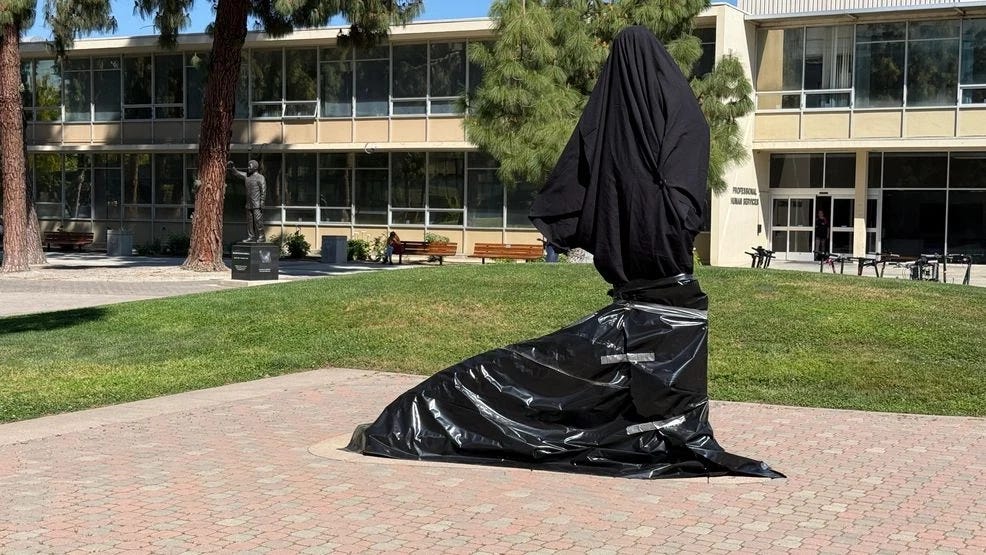
Half of Los Angeles seems to be named after him. Avenida César Chávez, the César Chávez Administration Building, César E. Chávez Department of Chicana and Chicano Studies. When the allegations of Chávez’s decades of sexual abuse of young men and girls went public, attention immediately turned to the fate of these places—understandable given that these largely bureaucratic questions are far easier to stomach than the gut-wrenching fall from grace of perhaps the most famous Mexican American ever.
I know that I should not be surprised. Pedophiles have infiltrated every corner of society, have slithered to the top of every ladder. The Epstein files don’t discriminate between Republicans and Democratics, or even Marxists. It is entirely possible to tell the history of this country as a story of men and their misdeeds, their devastating shortcomings. And still, I’ve been on the verge of tears most of the day.
The theme of the week seems to be women treating men much better than they deserve to be treated, whether Susan Abulhawa’s gracious response to Zohran Mamdani’s parroting of Zionist talking points or Dolores Huerta’s beautiful statement on the Chávez debacle. Huerta describes how she kept a secret for 60 years because “building the movement and securing farmworker rights was my life’s work… and I wasn’t going to let César or anyone else get in the way.”
The reversal of the common narrative of the United Farm Workers (UFW) here is dizzying. Far from being the prophetic leader, Huerta describes Chávez as a liability—obstacle, not ally. Huerta’s commitment to their collective project was so intense that she was willing to endure not one but two assaults from Chávez, both of which produced children she birthed covertly and placed with families ignorant of the circumstances of their creation.
This is what humbles me most. The only thing more difficult for me to imagine than surviving this level of humiliation is to believe in something enough to make to this level of sacrifice possible. Ultimately, the point of Huerta’s deafening silence is that the world for which we fight is larger and more important than any one of us. It is unsurprising, then, that many early suggestions for Chávez’s namesakes seek just to reattribute them to the UFW in general, or even Huerta herself (as the union’s co-founder, she has at least as much claim to it as Chávez).
But what frightens me most are efforts like those of Texas Governor Greg Abbott to use Chávez’s fall from grace to erase the gains of the Chicano movement altogether. If we are to pull a lesson from this moment—as we must—it is that we should find ways to communicate that do not repeat tired and inaccurate tales of heroes and their triumphs. It has always been us, even and especially when this “us” overflows with anguish and grief. “Dolores,” after all, means “pains.”